
【2026 Taiwan Startup Investment Trends Annual Report – Overview 】From Expansion to Pragmatism: Taiwan’s Startup Investment at a Turning Point
Taiwan’s startup investment market cooled significantly in 2025, with both deal count and investment value declining, primarily due to increased public market activity, shifting C/CVC priorities, and a decline in small deals. Nevertheless, the median deal size reached a record high, suggesting that investors have become more pragmatic, favoring startups with evidence of market validation. Seed-stage investment declined, while late-stage investment rebounded. Meanwhile, investment in AI and semiconductors continued to gain momentum, making them key areas of investor interest.
Although C/CVC participated in fewer deals, it remained the largest investor group, while VC accounted for a larger share of deals and participation by foreign investors increased. Overall, Taiwan’s startup investment market is shifting from capital expansion toward a more pragmatic phase with a greater focus on technology and market viability. Looking ahead, strengthening seed-stage support and international linkages will be essential to sustaining innovation momentum.
1. Startup Investment Slows as Deal Count and Investment Value Decline
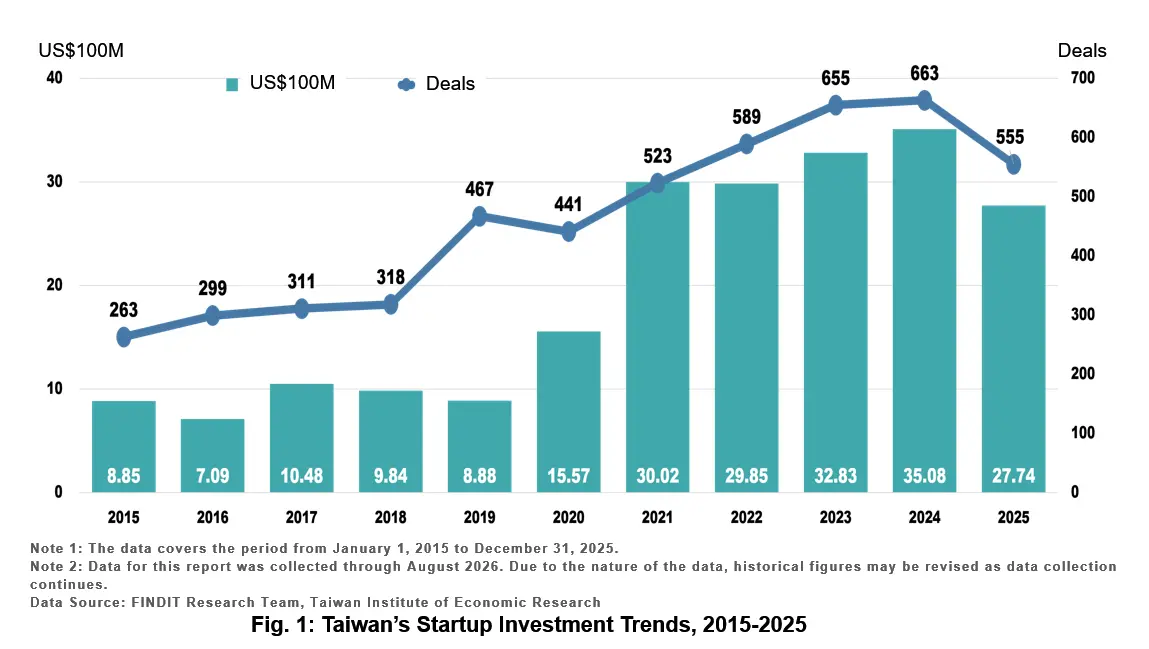
Taiwan’s startup investment market saw strong growth after 2021, with both investment value and deal count repeatedly reaching new highs. Our analysis covers 5,084 startup investment deals in Taiwan between 2015 and 2025, with a combined value of more than US$21.623 billion. Apart from a decline in 2020 due to the COVID-19 pandemic, deal count grew steadily through 2024, while annual investment value averaged more than US$2.5 billion. However, startup investment slowed in 2025. Compared with 2024, investment value fell approximately 17.02%, from US$3.343 billion to US$2.774 billion, while deal count declined approximately 8.26%, from 605 to 555. This marked the first time in five years that both deal count and investment value declined.
A closer look points to three main factors. First, stock market activity increased sharply. As the AI wave swept across the globe, Taiwan’s semiconductor industry drew growing international attention and became increasingly attractive to investors, helping fuel broader stock market gains. Monthly trading value on Taiwan’s stock market rose from NT$5.3 trillion in January 2025 to NT$10.65 trillion in December, more than doubling over the course of the year. The market index rose 25.74% in 2025, while total market capitalization increased by NT$20.4 trillion. With the stock market performing strongly, privately held startups, which typically carry higher risk and offer lower liquidity, struggled to attract investor attention, contributing to the slowdown in startup investment.
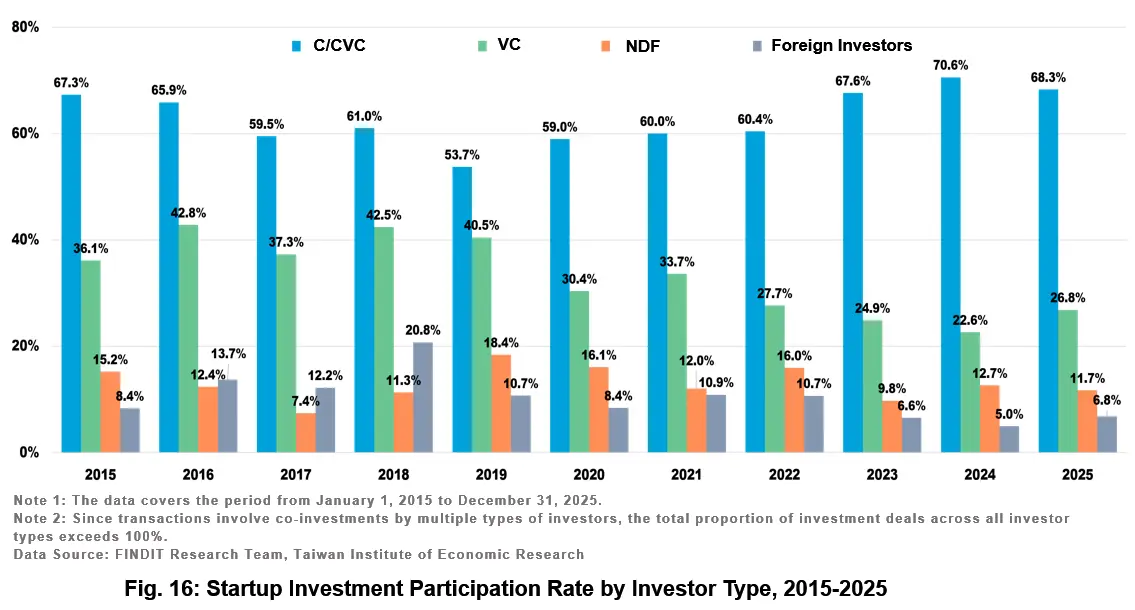
Second, beyond the divergence between a rising stock market and declining startup investment, the structure of Taiwan’s startup investment market also contributed to the slowdown. Unlike in the global venture capital market, C/CVC plays a particularly prominent role in Taiwan’s startup investment market. Between 2015 and 2025, C/CVC participated in 63.4% of all startup investment deals, with its share reaching a record high of 70.6% in 2024. These strategic investors provide startups with not only capital but also resources critical to their growth.
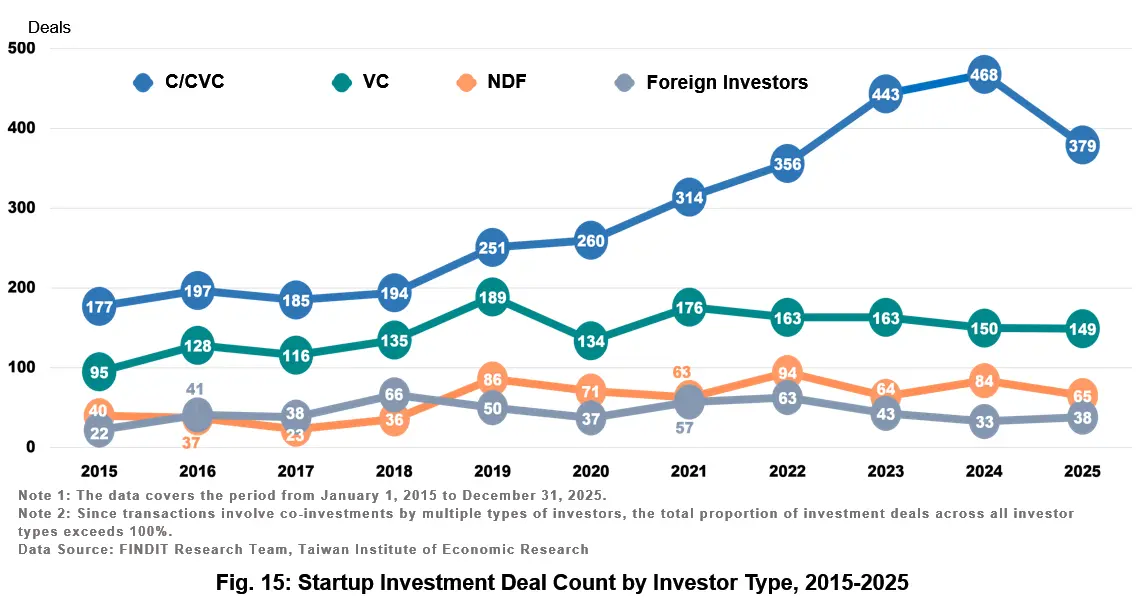
Unlike VC, which focuses primarily on investment, C/CVC investors must also consider broader corporate or group-level priorities. As a result, they tend to allocate capital more flexibly in line with their corporate strategies, whether by increasing investment in their core operations, expanding into overseas markets, or allocating more capital to public markets. In 2025, however, the number of C/CVC deals declined from 468 in 2024 to 379, with C/CVC’s share of total deals falling from 70.6% to 68.3%. This decline in C/CVC participation, in turn, contributed to the overall slowdown in startup investment.
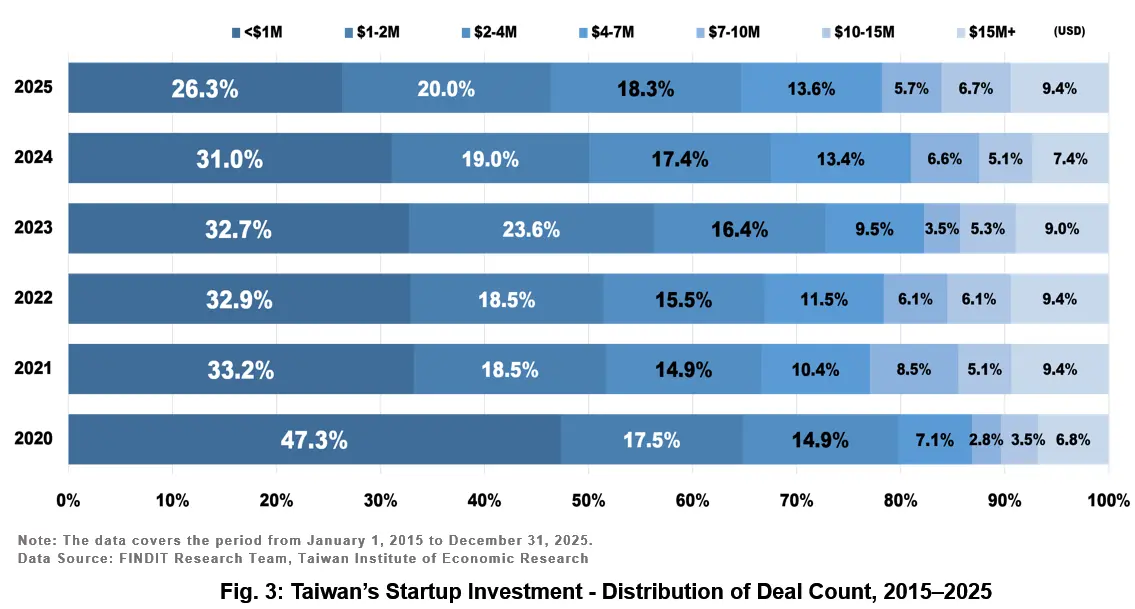
The third factor was a shift in deal sizes. Deals of less than US$1 million account for a significant share of overall deal count, but their number fell sharply in 2025, down 30.93% from 2024. Their share of total deals also declined from 31.0% in 2024 to 26.3% in 2025, falling below 30% for the first time. Meanwhile, the number of large deals also declined. Deals of more than US$10 million are a major driver of overall investment value, accounting for around 60% of the total in recent years.
The impact of the largest deals is particularly significant. In 2024, eight deals exceeded US$50 million, including AltruBio (US$225 million), APh ePower (NT$2.775 billion), KKday (US$70 million), Botrista (US$225 million), and TXOne Networks (US$51 million). In 2025, only three deals exceeded this threshold: Arena AI (US$100 million), Taiwan Bio-Manufacturing Corporation (TBMC; NT$2.295 billion), and Taiwan Smart Electricity & Energy (NT$1.555 billion). Fewer small deals, together with fewer mega-deals, resulted in declines in both deal count and investment value in Taiwan.
2. Investor Confidence Holds Firm as Median Deal Size Continues to Rise
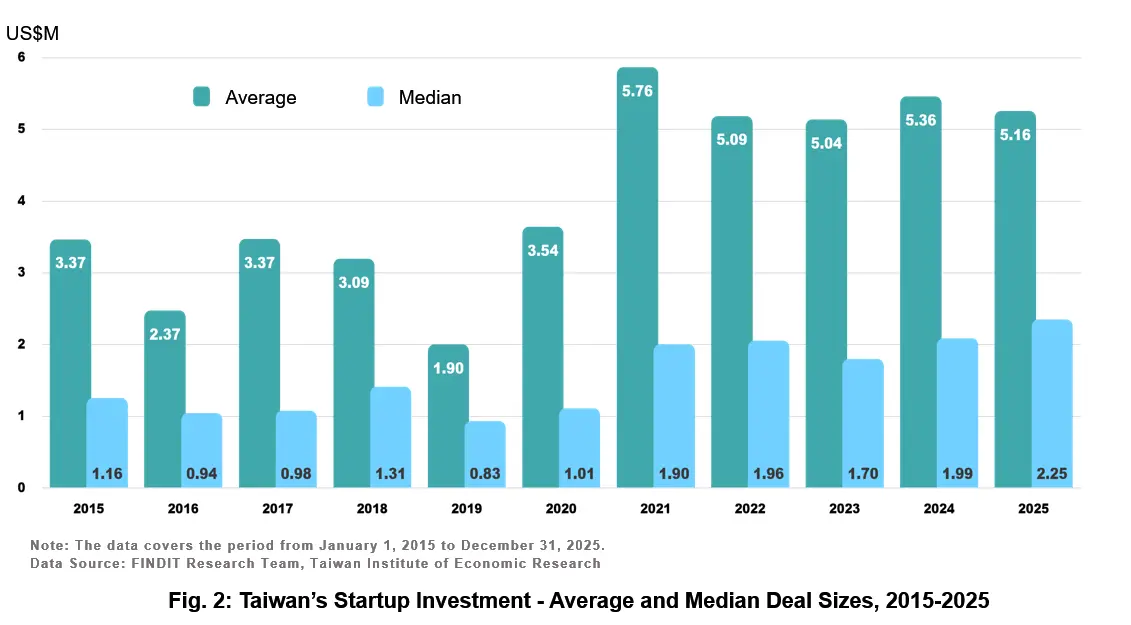
Despite the overall slowdown in Taiwan’s startup investment market, funding for startups that secured investment remained robust. In 2025, the average deal size still exceeded US$5 million, while the median rose to a record high of US$2.25 million.
The gap between the average and median deal sizes narrowed from approximately US$3.37 million in 2024 to US$2.91 million in 2025. As discussed above, the value of large deals declined. Together, these trends suggest that investment became less concentrated in a small number of deals, with mid-sized deals appearing to attract more investment. The shift also reflects the decline in C/CVC deals, which tend to be smaller in value. As investment activity among other investor groups, including VC and foreign investors, did not decline, the average deal size remained high while the median continued to rise.
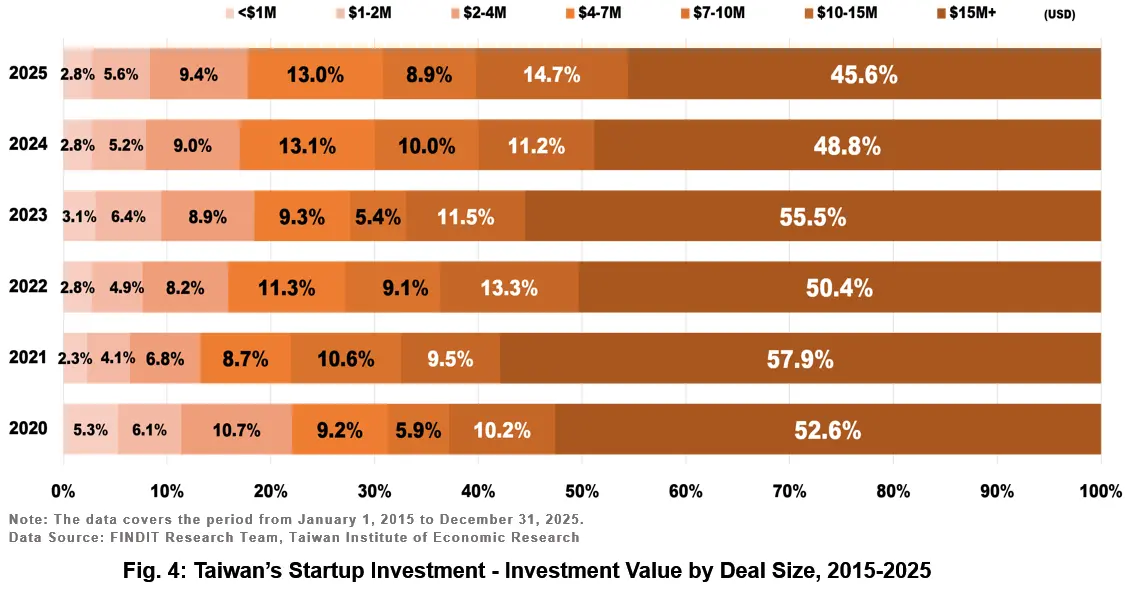
To examine the distribution of startup investment, we grouped deals by investment value and calculated each group’s share of total deal count and investment value. In 2025, deals of less than US$1 million accounted for 26.3% of total deal count, down from 31.0% in 2024. By contrast, deals between US$1 million and US$7 million gained share to varying degrees. The shares rose from 19.0% to 20.0% for US$1 million-US$2 million deals, from 17.4% to 18.3% for US$2 million-US$4 million deals, and from 13.4% to 13.6% for US$4 million-US$7 million deals. Among larger deals, the share of US$7 million-US$10 million deals fell from 6.6% to 5.7%, while the share of US$10 million-US$15 million deals increased from 5.1% to 6.7%. These shifts suggest that investors are increasingly favoring later funding rounds.
In recent years, deals of more than US$15 million have accounted for around half of total investment value. Their share fell notably from 55.5% in 2023 to 48.8% in 2024. Nevertheless, several deals exceeding US$50 million, including AltruBio, KKday, and Botrista, helped maintain growth in overall investment value that year. In 2025, deals of more than US$15 million saw their share fall further to 45.6%. With only three deals exceeding US$50 million, large deals were no longer enough to sustain growth in overall startup investment value.
3. Seed-Stage Investment Declines, Commercial Viability Becomes Key
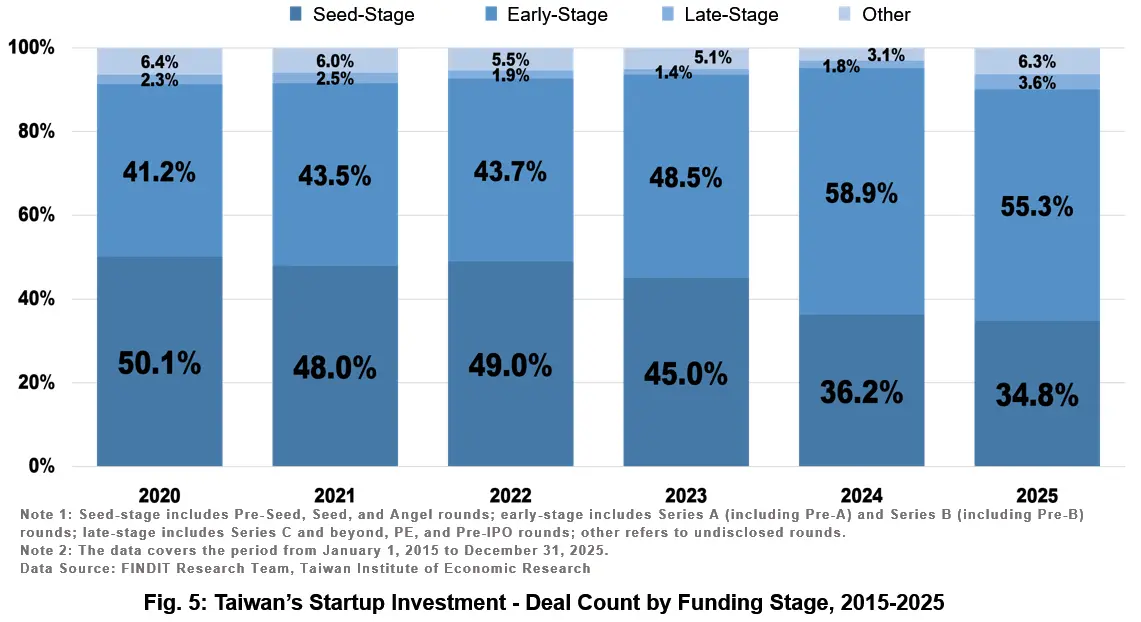
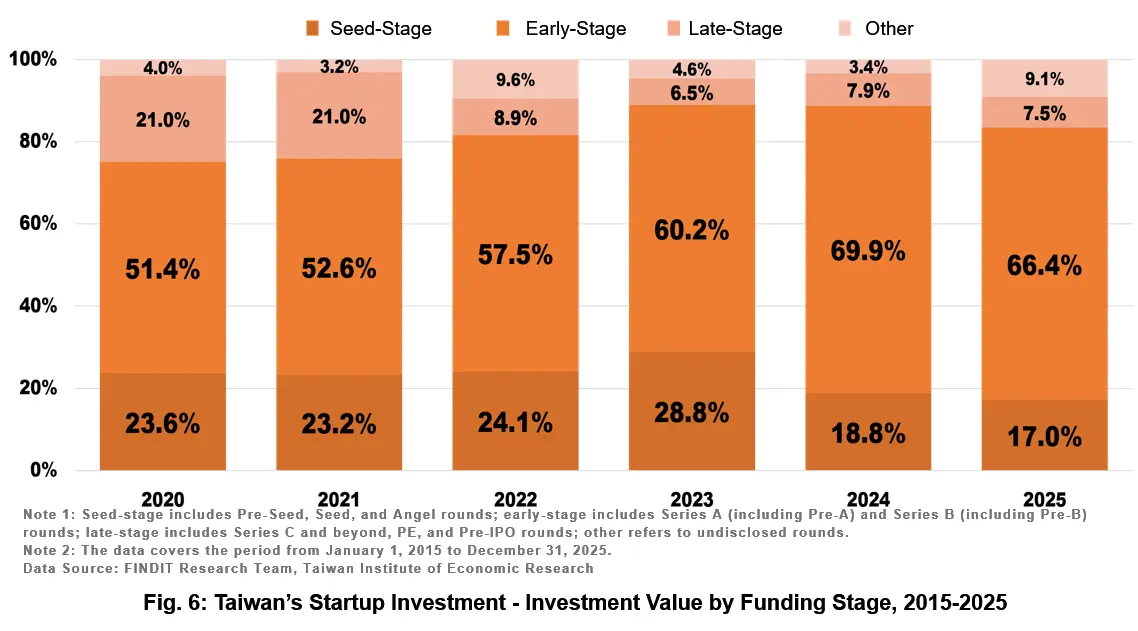
In 2020, seed-stage deals (Seed and Angel rounds) accounted for 50.1% of total deal count, representing the largest share of Taiwan’s startup investment market. Trends over the past five years, however, indicate that investors have gradually shifted toward more mature startups. By 2025, the share of seed-stage deals had fallen to just 34.8%, below the 55.3% recorded for early-stage deals (Series A and B).
Investment value, meanwhile, was concentrated primarily at the early stage. Early-stage deals accounted for 51.4% of total investment value in 2020, rising to 66.4% in 2025. By contrast, the seed stage saw its share decline from 28.8% in 2023 to 17.0% in 2025. The late stage (Series C and beyond, including PE and Pre-IPO rounds) recorded an even sharper decline. Its share of total investment value fell from 21.0% in 2021 to 8.9% in 2022 and stood at 7.5% in 2025.
These shifts across funding stages suggest that seed-stage startups are finding it increasingly difficult to secure external investment. Startups reaching Series A or B are more likely to attract investors once they have demonstrated profitability and a validated business model. As AI continues to advance rapidly worldwide, technological innovation is becoming increasingly important, with startups playing a vital role in driving that progress. Sustaining the development of the startup ecosystem will therefore require both fostering more market-competitive startups and expanding investment in seed-stage companies.
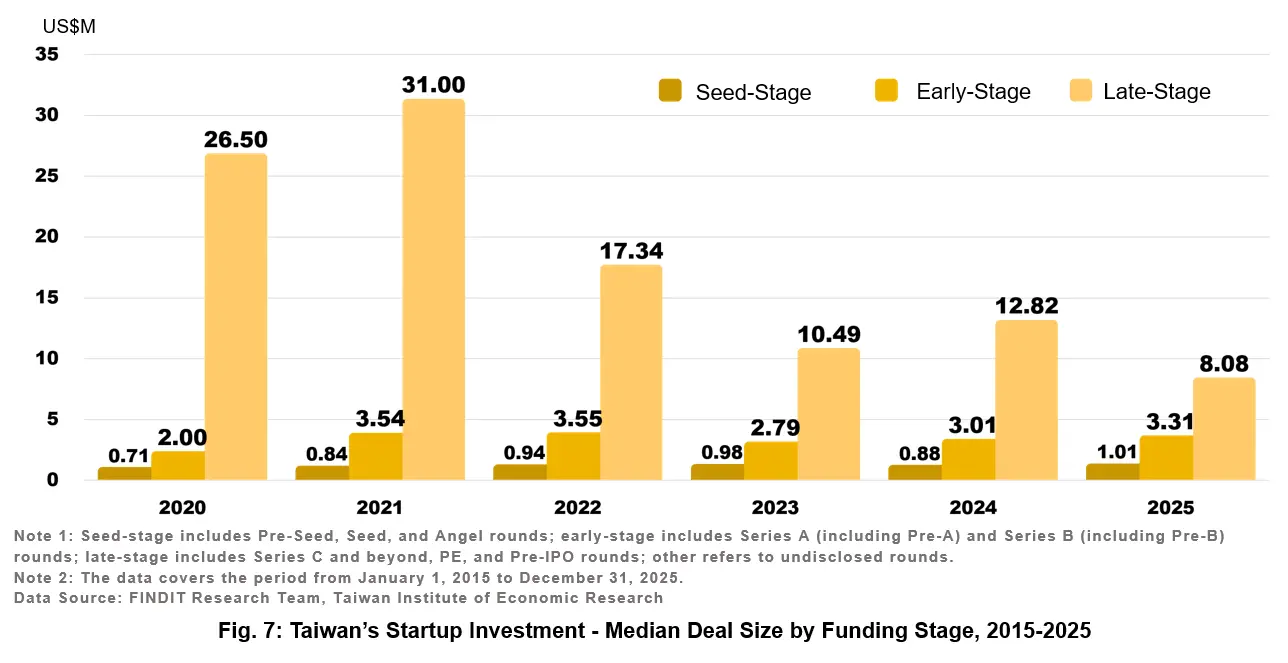
Median deal sizes across funding stages also appear to be converging. The median deal size at the seed stage rose from US$710,000 in 2020 to US$1.01 million in 2025, while the early-stage median rose from US$3.01 million in 2024 to US$3.31 million in 2025. The late stage saw the most substantial decline, with the median deal size falling from US$31 million in 2021 to just US$8.08 million in 2025.
4. Younger Startups Remain the Focus, but Investors Grow More Pragmatic
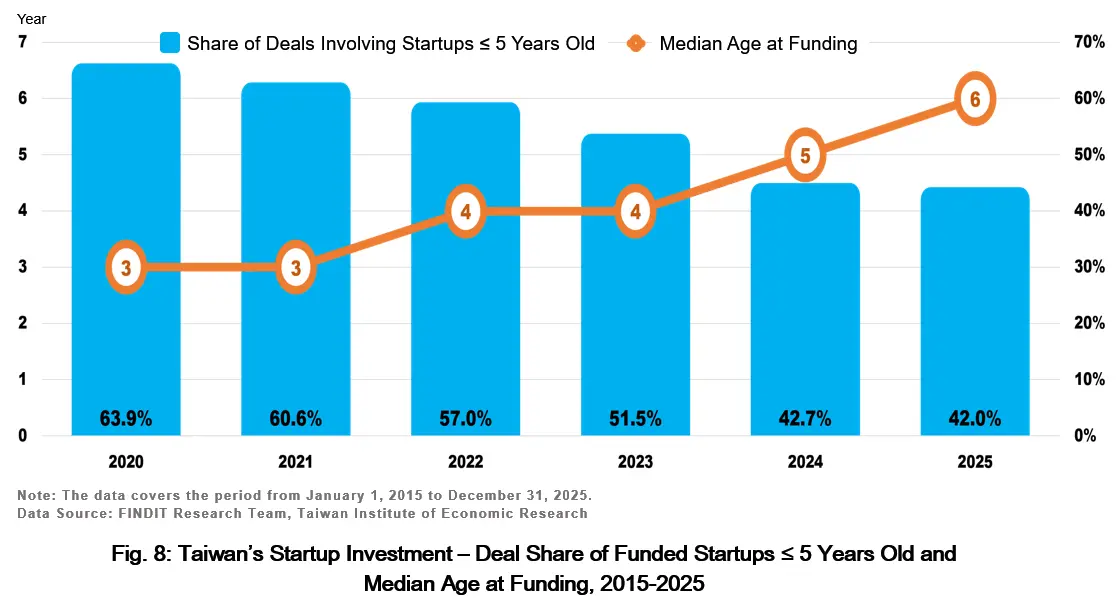
In 2020, around 63.9% of startup investment deals in Taiwan involved companies established within the previous five years. This share, however, declined steadily to just 42.0% in 2025. A similar trend can be seen in the median age of startups at the time of investment. In both 2020 and 2021, the median age of funded startups was three years. It gradually increased to five years in 2024 and rose further to six years in 2025. As discussed above, Taiwan’s startup investors have become more pragmatic and selective than in previous years. Their appetite for seed-stage startups with technologies still in the research stage, unclear business models, or limited market validation has gradually declined.
Instead, investors are paying greater attention to more mature startups with proven track records, either by participating in subsequent funding rounds or making follow-on investments in their portfolio companies. Newly established startups therefore face not only the challenge of entering the market but also increasing difficulty in securing external investment.
5. Hardware and Manufacturing Investment Holds Steady as AI and Semiconductors Attract Attention
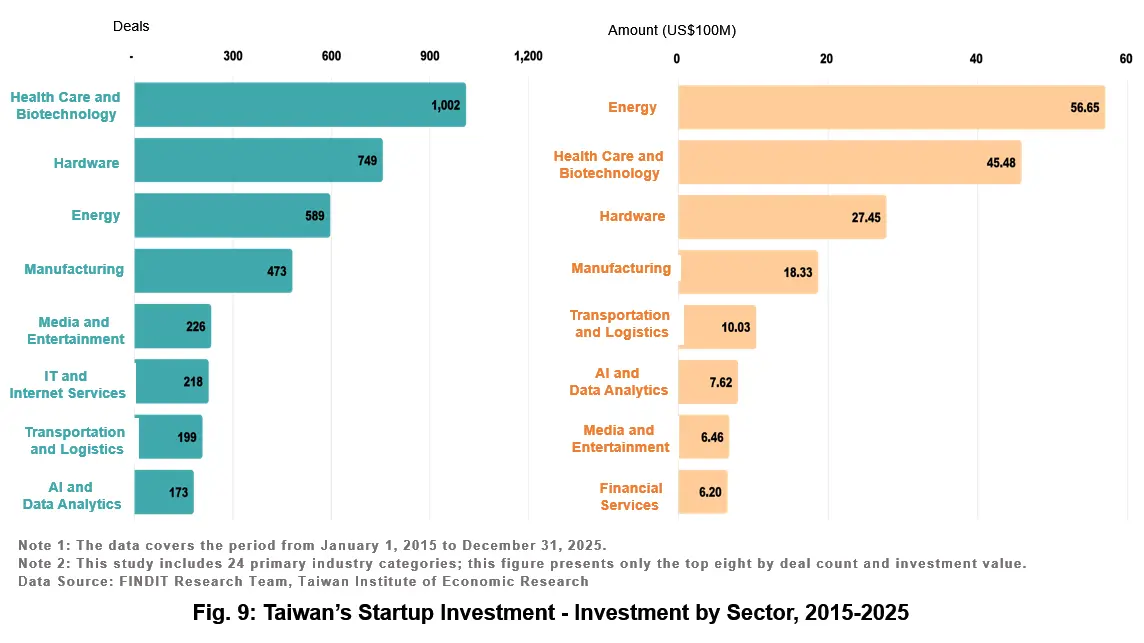
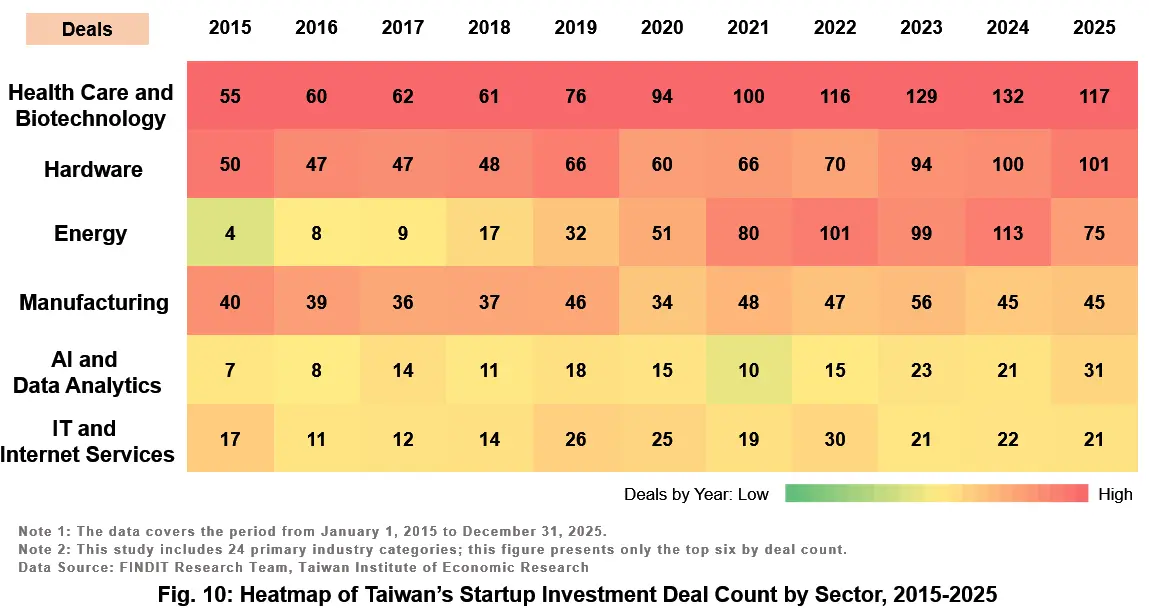
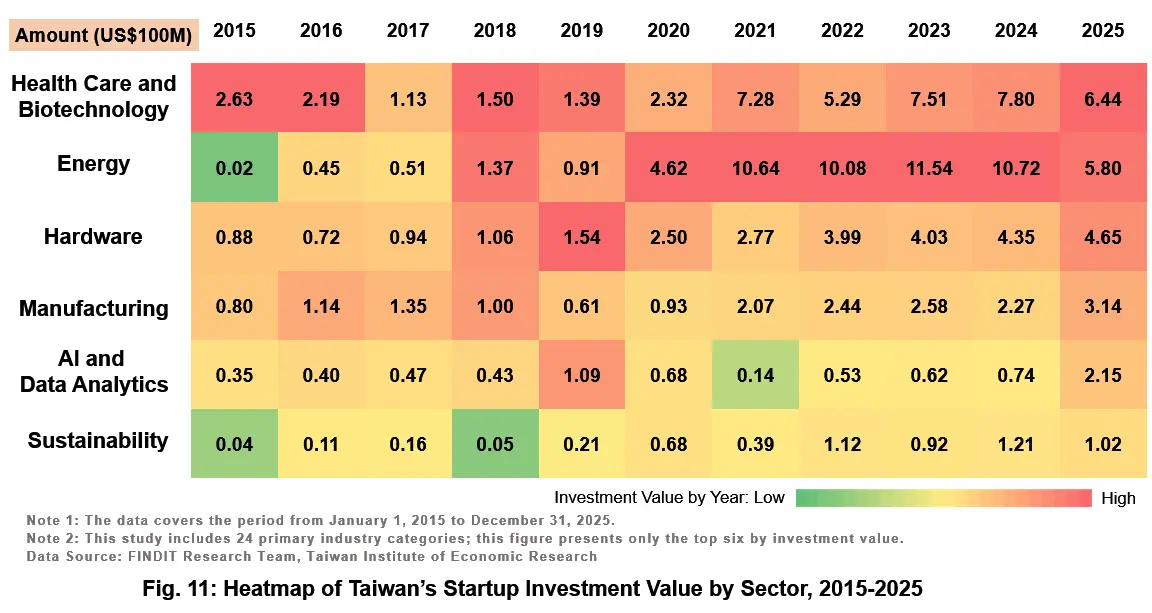
Health care, hardware, energy, and manufacturing have long been key areas of startup investment in Taiwan. Healthcare & biotechnology has attracted substantial venture capital investment both domestically and internationally, reflecting not only its high capital requirements and barriers to entry but also its fundamental importance to human health and everyday life. Between 2015 and 2025, the sector recorded 1,002 investment deals, accounting for 19.71% of all deals, with a combined investment value of US$4.548 billion, or 21.03% of the total. Investment in healthcare & biotechnology declined in 2025, with deal count falling 11.36% year over year to 117 and investment value dropping approximately 17.45% to US$743 million.
Despite the slowdown, several startups continued to attract investor attention in 2025, particularly those developing AI applications in healthcare. These included Nitra, which provides hospitals with a one-stop AI platform integrating healthcare operations; Health2Sync, which develops chronic disease management tools combining digital therapeutics and data-driven services; EverBot, which specializes in medical AI robotics, smart healthcare, and hospital automation solutions; Compass Bioinformatics, which offers an AI-driven genetic diagnosis platform for rare diseases; and H2U, which focuses on health data integration and AI applications.
Hardware and manufacturing, two sectors closely tied to Taiwan’s industrial strengths, have also been major areas of startup investment. Hardware encompasses electronic components, semiconductors, ICT hardware, and consumer electronics, as well as products related to robotics, drones, and satellite communications. Between 2015 and 2025, the sector recorded 749 investment deals with a combined value of US$2.745 billion. Manufacturing, meanwhile, covers equipment, materials, and specialized services used in industrial processes. Over the same period, the sector recorded 473 deals totaling US$1.833 billion.
Although overall startup investment declined in 2025, rapidly growing global demand for AI hardware increased the importance of Taiwan’s electronics and manufacturing capabilities, helping sustain investment in startups across these sectors. Hardware and manufacturing recorded 101 and 45 deals, respectively, broadly in line with 2024 levels. Investment value, however, rose to US$465 million in hardware and US$314 million in manufacturing, representing year-over-year increases of 6.79% and 38.25%, respectively.
Investment in the energy sector accelerated rapidly after 2020, driven by government policies and corporate demand. Between 2015 and 2025, the sector recorded 589 deals totaling approximately US$5.665 billion, with green energy and energy storage attracting the most investment. However, as corporate investment activity slowed, the energy sector experienced a substantial decline in 2025. Deal count fell 33.63% year over year to 75, while investment value dropped 45.91% to US$580 million.
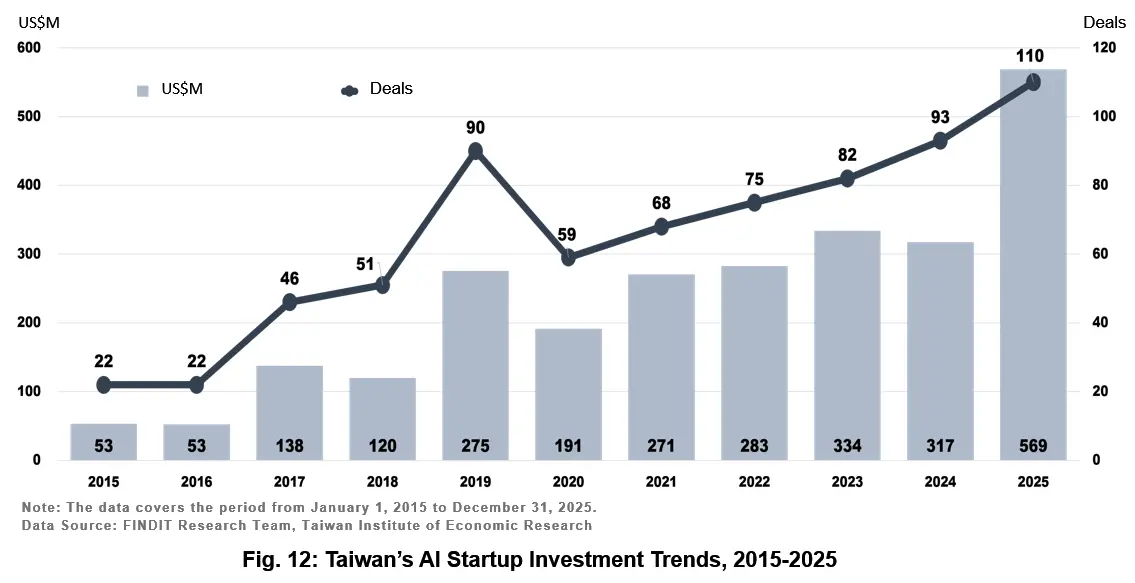
Beyond the major sectors discussed above, we also examined investment across application areas that span multiple industries. Among these, AI and semiconductors have attracted growing market attention in recent years. Between 2015 and 2025, AI startups recorded 718 investment deals with a combined value of US$2.603 billion. As AI continued to gain prominence, both deal count and investment value increased steadily. In 2019, numerous AI startups across a range of applications secured investment. These included Appier, which applies AI to advertising and marketing; Perfect Corp., which integrates AI into beauty solutions; iKala, which develops AI transformation solutions across industries; CloudMile, which focuses on enterprise cloud and generative AI applications; CyCraft, which provides AI-driven cybersecurity automation; and Techman Robot, which specializes in human-robot collaboration.
Many of these companies have become leading players in Taiwan’s startup ecosystem. Their funding rounds helped drive a sharp increase in AI investment that year, and several have since gone public. In 2025, both deal count and investment value for AI startups reached record highs. Deal count rose 18.28% year over year to 110, while investment value surged 79.25% to US$569 million. Together, 2024 and 2025 accounted for 46.88% of total AI startup investment value and 28.27% of deal count between 2015 and 2025. These figures underscore the growing investor focus on AI in recent years, alongside continued efforts by startups to develop new solutions and tap into emerging market opportunities.
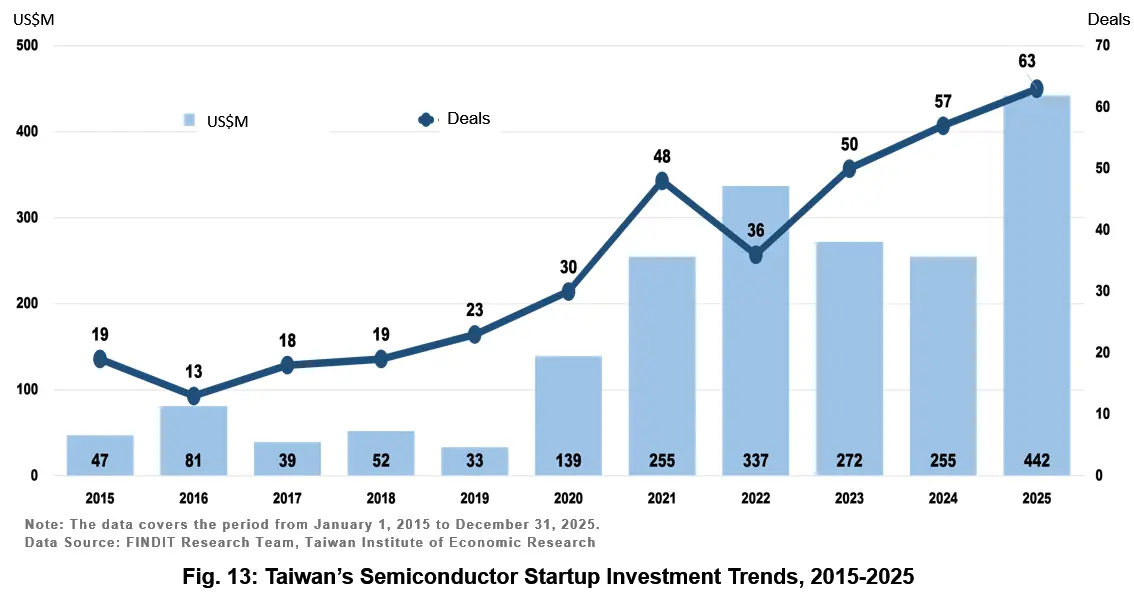
Turning to semiconductors, Taiwan has one of the world’s most advanced and mature semiconductor supply chains, while new technological demands arising from the AI wave have spurred more startups to enter the field. Between 2015 and 2025, semiconductor startups recorded 376 investment deals with a combined value of US$1.952 billion. As Taiwan’s global prominence in semiconductors has grown, investment in semiconductor startups has continued to rise. In 2025, both deal count and investment value reached record highs. Deal count increased 10.53% year over year to 63, while investment value surged 73.33% to US$442 million.
Notable startups include Jmem Tek, which focuses on post-quantum cryptography (PQC) chips; Phasetrum, which specializes in advanced RFIC and phased-array solutions; Brillink, which develops integrated silicon photonics and high-speed optical communications solutions; and Pulsaris AI, which is developing an AI-driven electronic design automation (EDA) engine. Other examples include Best Epitaxy, which focuses on high-speed optical communications, silicon photonics, and III-V epitaxy; GCCS, which develops silicon carbide (SiC) ingots for third-generation semiconductors; MemoLead, which develops customized high-bandwidth memory; Ancora Semi, which provides next-generation gallium nitride (GaN) technologies and solutions; and AuthenX, which focuses on silicon photonics laser sources, optical fibers, and co-packaged optics (CPO).
More than 30% of both the deal count and investment value recorded for semiconductor startups between 2015 and 2025 was concentrated in 2024 and 2025, underscoring the strong investment momentum in recent years.
6. C/CVC Participation Declines but Remains Central to Taiwan’s Startup Investment Market
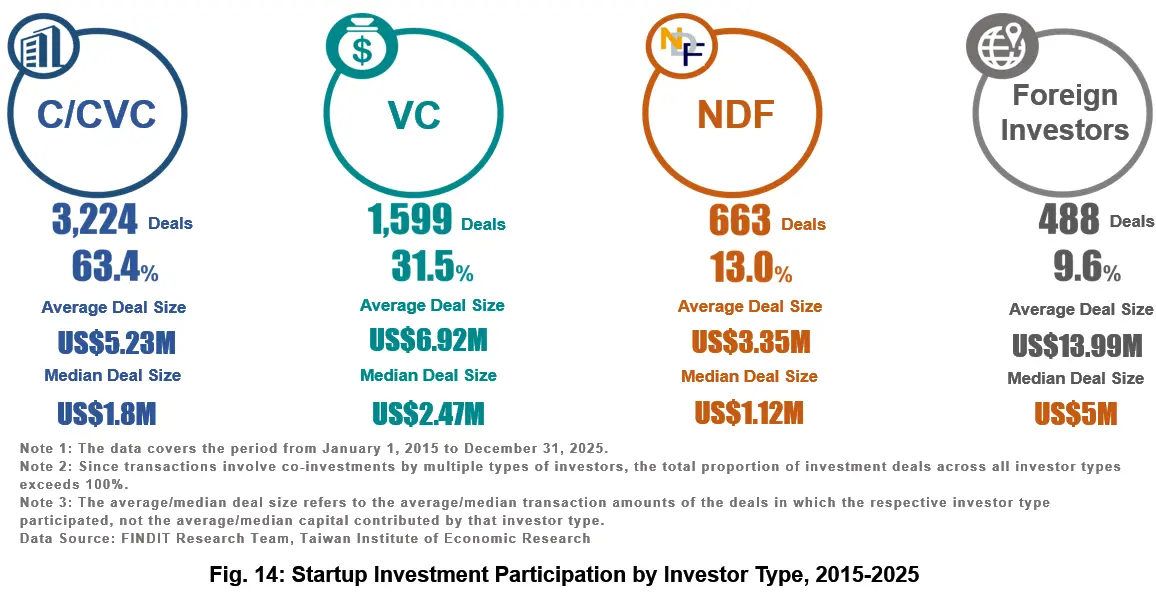
Between 2015 and 2025, C/CVC participated in 3,224 of the 5,084 startup investment deals recorded in Taiwan, accounting for approximately 63.4% of the total. The average deal size was approximately US$5.23 million, while the median stood at US$1.80 million. C/CVC investment was concentrated in four main sectors: healthcare & biotechnology, energy, hardware, and manufacturing. In 2025, C/CVC participated in 71 healthcare & biotechnology deals, representing 18.73% of all C/CVC deals and a 6.58% decline from 76 in 2024. Energy ranked second with 69 deals, or 18.21% of the total, down 33.01% from 103 in 2024.
By contrast, C/CVC investment in hardware and manufacturing, two sectors closely tied to Taiwan’s industrial development, remained relatively stable. Hardware, which includes electronic components, semiconductors, robotics, and consumer electronics, recorded 67 deals in 2025, representing 17.68% of all C/CVC deals and a 4.69% increase from 2024. Manufacturing recorded 34 deals, unchanged from 2024 and accounting for 8.97% of C/CVC deals.
Overall, C/CVC deal count declined in 2025 for the first time since 2018, falling from 468 in 2024 to 379. C/CVC’s share of total startup investment deals also declined, from 70.6% in 2024 to 68.3% in 2025.
Domestic and foreign VC firms participated in 1,599 startup investment deals between 2015 and 2025, accounting for approximately 31.5% of the total. The average deal size was US$6.92 million, while the median was US$2.47 million. VC participated in 149 deals in 2025, virtually unchanged from 150 in 2024. With overall startup deal count declining, however, VC’s share of total deals rose to 26.8% in 2025.
Healthcare & biotechnology and hardware were the two main sectors for VC investment in 2025, with 40 and 22 deals, respectively, accounting for 26.85% and 14.77% of all VC deals. Meanwhile, as global investment in AI continued to grow, VC firms increased their investment in startups focused on AI and data analytics. Deal count more than doubled from eight in 2024 to 18 in 2025, an increase of 125%.
The National Development Fund (NDF) has played an important role in catalyzing the development of Taiwan’s startup investment market. In 2018 and 2019, for example, its Business Angel Investment Program helped stimulate domestic startup investment by mobilizing private-sector capital. The NDF has also invested in venture capital firms through a fund-of-funds (FOF) approach, helping channel capital from domestic and foreign investors into Taiwan’s startup market.
Between 2015 and 2025, the NDF participated in 663 investment deals, accounting for approximately 13.0% of the total. The average deal size was approximately US$3.35 million, while the median was US$1.12 million. In 2025, the NDF participated in 65 deals, down from 84 in 2024, while its share of total deals declined slightly from 12.7% to 11.7%.
Despite this decline, the NDF’s continued implementation of seven NT$10 billion thematic investment programs is expected to generate a new wave of startup investment in 2026. These programs target SMEs, strategic manufacturing industries, strategic service industries, cultural and creative industries, AI startups, green growth and net-zero industries, and smart robotics.
Finally, although foreign investors participated in relatively few deals, their deal sizes tended to be considerably larger. Between 2015 and 2025, foreign investors participated in 488 deals, accounting for approximately 9.6% of the total. Their average deal size was US$13.98 million and the median was US$5 million, both higher than those of the other three investor groups. Foreign investor participation increased in 2025, with deal count rising from 33 in 2024 to 38 and its share of total deals climbing from 5.0% to 6.8%.
7. Conclusion
After several years of strong growth, Taiwan’s startup investment market is entering a new phase marked by structural adjustment and more disciplined investment. Taiwan largely avoided the global venture capital downturn that began in 2022, with startup investment continuing to grow through 2024. However, as the AI wave gained momentum, Taiwan’s startup investment market cooled in 2025, with both deal count and investment value declining.
Three key factors contributed to this slowdown. First, Taiwan’s stock market rallied on the strength of its semiconductor and AI supply chains, drawing substantial capital into public markets. This, in turn, crowded out investment in privately held startups, which typically carry higher risk and offer lower liquidity.
Second, Taiwan’s startup investment market relies heavily on C/CVC participation, which accounted for more than 60% of all deals. With public markets delivering strong returns and industries navigating the restructuring of global supply chains, corporate investors increasingly redirected resources toward expanding their core businesses, pursuing overseas growth, or investing directly in public markets. As a result, the number of C/CVC deals declined significantly.
Third, the market saw fewer small deals, which typically drive overall deal activity, as well as fewer mega-deals, which are key drivers of total investment value. Together, these declines contributed to the overall drop in both deal count and investment value.
Despite the overall contraction, the median deal size reached a record high of US$2.25 million. This suggests that investors have not lost confidence but have instead become more pragmatic and selective, increasingly favoring startups with a clearer path to generating revenue and evidence of market validation. At the same time, the median age of startups at the time of investment rose from three to six years, while seed-stage startups faced a higher bar for fundraising.
Shifts in Taiwan’s startup investment across sectors have closely mirrored changes in global AI and hardware supply chains. Healthcare & biotechnology and energy, both long-standing areas of investor interest, entered a period of adjustment following earlier funding peaks, with energy experiencing a particularly sharp decline as corporate investment slowed. Meanwhile, amid the global AI boom and the growing strategic importance of semiconductors, Taiwan has leveraged its strengths in semiconductors and industrial manufacturing to attract capital to leading startups capable of integrating technologies across multiple fields.
In 2025, both deal count and investment value reached record highs for AI and semiconductor startups. Investment in AI startups totaled US$569 million across a wide range of hardware and software technologies and applications. Semiconductor startup investment also reached US$442 million, spanning cutting-edge technologies such as silicon photonics, cybersecurity, advanced packaging, and EDA. Healthcare startups have increasingly incorporated AI applications as well, demonstrating how technological advances can drive industry growth and create value.
Looking ahead, sustaining the momentum of Taiwan’s startup ecosystem will depend on fostering a new generation of startups and strengthening ties with international industries and investors. The global AI wave, combined with Taiwan’s strengths in semiconductors and electronics, has brought the country into the international spotlight and significantly raised its global profile. The challenge now is to translate this visibility into market value and, in turn, strengthen Taiwan’s startup ecosystem before this window of opportunity narrows. This will require continued investment in emerging startups through talent development, funding, technology, and market access to expand Taiwan’s capacity for innovation. It will also require continuously assessing startups as they develop and adopting a more selective, tailored approach to providing the resources they need at different stages of growth.
To support these efforts, the government’s Five Trusted Industry Sectors initiative, New Ten Major AI Infrastructure Projects, and the NDF’s seven NT$10 Billion Thematic Investment Programs are expected to play a key role in mobilizing and channeling investment in 2026. Overall, Taiwan’s startup investment market is transitioning from a phase of capital expansion toward one increasingly focused on market opportunities and technological capabilities. By drawing on its strengths in semiconductors, AI applications, and hardware manufacturing, together with policy incentives and international capital, Taiwan can strengthen the resilience of its startup ecosystem and create sustained momentum for long-term industrial transformation.