
【Taiwan Startup Investment Trends Annual Report – Agrifood Tech】Investment Priorities Shift toward Commercial Validation
Global agrifood tech investment reached $16.2 billion in 2025, with growing emphasis on upstream, technology-intensive startups and deep tech commercialization. This focus on technological feasibility creates opportunities for Taiwan to build on its strengths in AI and ICT. Taiwan’s agrifood tech sector attracted $68.5 million in investment; while total funding fell by nearly 50%, the median deal size reached a record $1.5 million. Upstream technologies accounted for 60% of investment, led by novel farming systems, while corporate venture capital (CVC) emerged as the leading investor type. Advancing commercial validation, strengthening midstream supply chain technologies, and expanding global connections can help Taiwanese agrifood tech startups translate their technological capabilities into sustained growth and international expansion.
As climate change, agricultural labor shortages, unstable food supplies, and rising production costs pose growing challenges, AI, biotechnology, IoT, and automation are accelerating the transformation of the agrifood industry. Meanwhile, as global capital markets become more cautious, investors are shifting their focus from scaling up to technological feasibility, operational efficiency, and commercial validation. Taiwan's capabilities in agricultural technology, ICT, precision machinery, and food processing provide a solid foundation for cross-sector integration, while its capital allocation and investor landscape continue to evolve.
Global Capital Shifts Toward Upstream Technologies as Deep Tech Commercialization Becomes Critical
According to AgFunder, global agrifood tech funding totaled US$16.2 billion in 2025, down 3% year over year. Upstream startups attracted US$9 billion, up 7% from the previous year, indicating a growing concentration of capital in technology-intensive ventures. The share of deep tech deals rose from 22% to 32% over the past decade. However, no deep tech company raised more than US$200 million in a single round in 2025, suggesting that growth-stage investors are still waiting for clearer evidence of commercial viability.
Debt financing accounted for 18.2% of total funding, a ten-year high, while climate tech funding increased 39% year over year, highlighting growing interest in alternative financing instruments and sustainability solutions.
Taiwan's Investment Value Declines While Median Deal Size Hits Record High
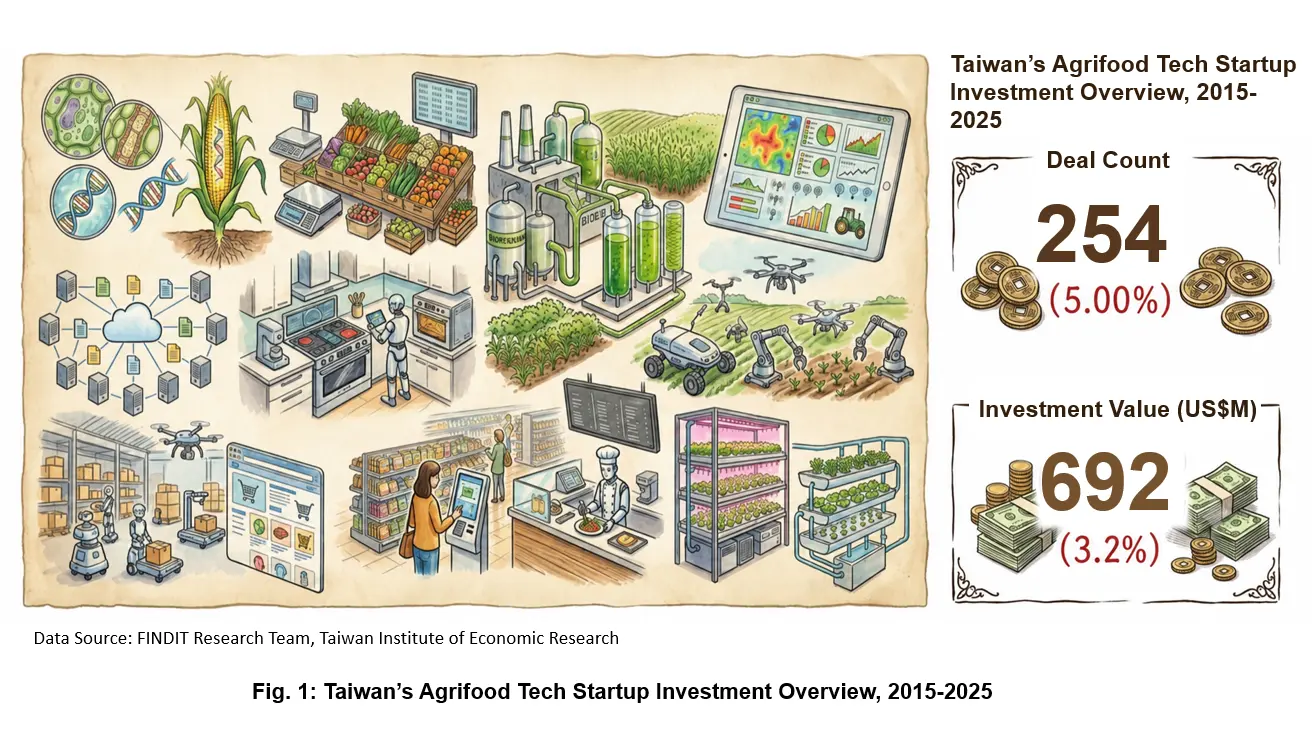
Between 2015 and 2025, Taiwan's agrifood tech startups recorded 254 investment deals totaling US$692 million, accounting for approximately 5% of the country's early-stage investment deals and 3.2% of total disclosed investment value. Following a record year in 2024, with 38 deals and US$136 million in funding, investment activity declined to 23 deals and US$68.5 million in 2025, representing a nearly 50% drop in investment value.
Annual investment totals were heavily influenced by large deals. For example, Botrista raised US$38 million in 2022 and US$65 million in 2024, significantly boosting investment totals in both years. This underscores the continued influence of a small number of major deals on overall investment activity.
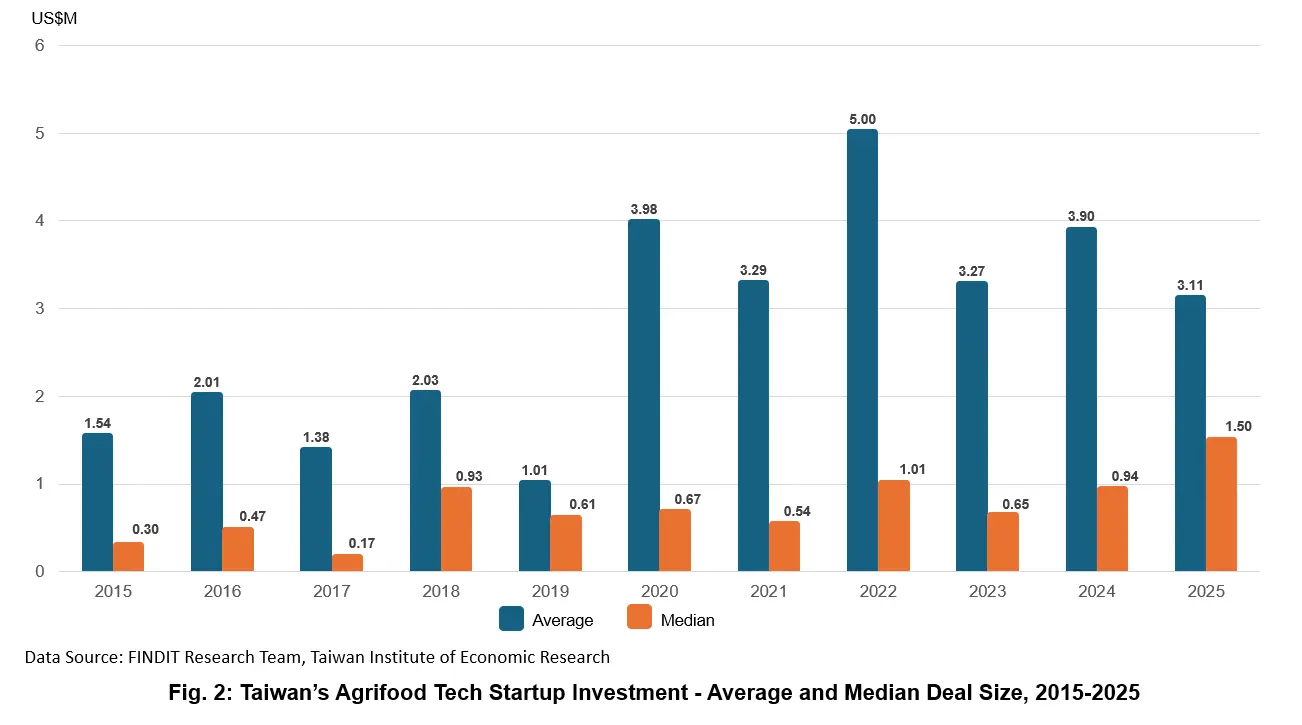
 However, the decline in total investment value did not translate into weaker performance across all metrics. In 2025, average deal size fell to US$3.11 million, while median deal size rose to a record high of US$1.5 million, significantly narrowing the gap between the two. The share of deals under US$1 million also declined to approximately 35%, while the proportion of deals valued between US$2 million and US$7 million increased. These shifts indicate a more diversified distribution of deal sizes in 2025, with a broader range of deals attracting larger investments.
Three Subsectors Attract Nearly 70% of Total Investment
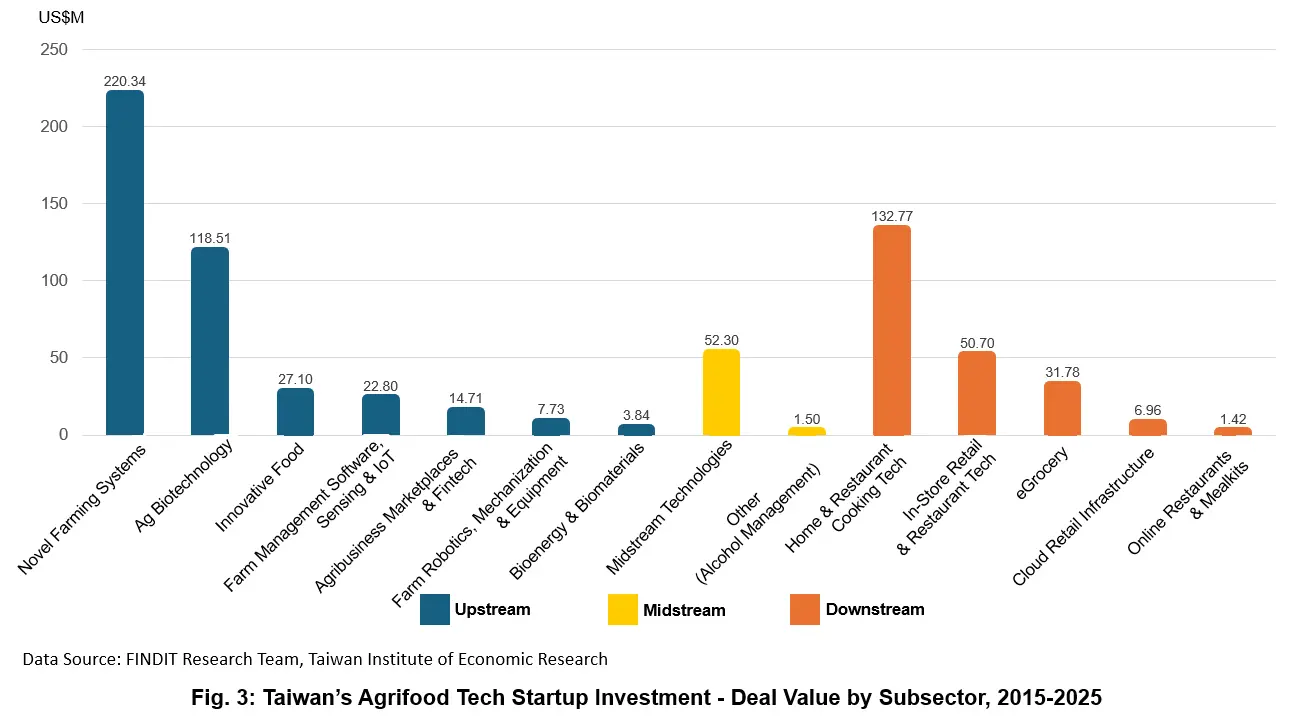
Across the supply chain, upstream technologies attracted approximately US$415 million in cumulative investment, accounting for 60% of the total. Among individual subsectors, novel farming systems led with US$220 million, followed by downstream home and restaurant cooking tech at US$133 million and upstream agricultural biotechnology at US$119 million. Together, these three subsectors accounted for approximately 68% of total investment value. Upstream technologies have also led in annual deal count since 2020, suggesting sustained investor interest in production-side innovation and R&D.
Notable Startups Leverage Smart Technologies to Broaden Agrifood Applications and Expand Overseas
In 2025, notable startups demonstrated the diverse applications of agrifood technologies. Botrista, a developer of automated beverage systems, secured another US$6.74 million in Series C funding to expand its team, advance AI R&D, and develop its global supply chain. Juan Yuan raised US$2.3 million in strategic funding to strengthen its health and sports nutrition brands, expand distribution channels, and enter international markets. Valtec completed a US$2 million Pre-Seed round. The company integrates AI, drones, radar, and sensing technologies to improve fish detection in distant-water fisheries and reduce fuel consumption. U.S.-based Crave Robotics secured US$2 million in seed funding to expand its smart hot-food vending business across U.S. hotels and campuses.
Corporate Strategic Investment Takes the Lead, with Opportunities to Strengthen Global Connections
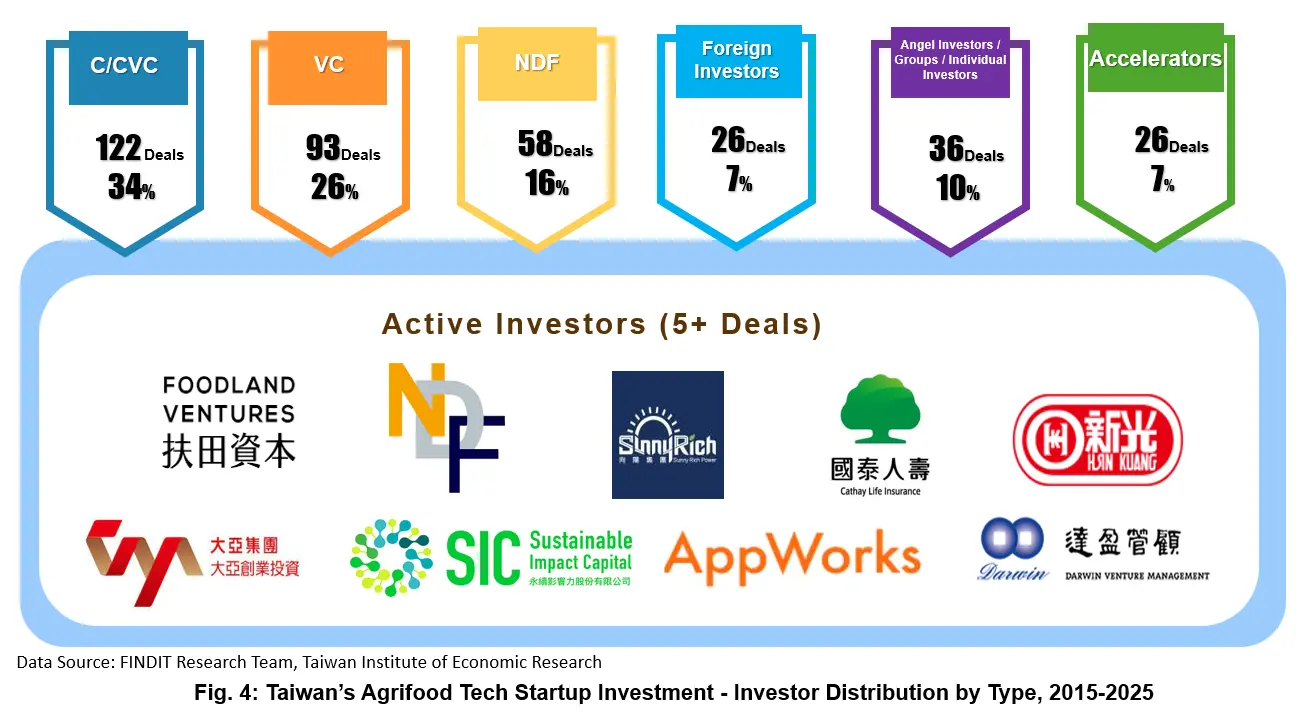
The investor landscape has gradually shifted from VC toward C/CVC. Since 2021, C/CVC has been the leading investor category, participating in 122 deals between 2015 and 2025 and accounting for 34% of total investor participation. VC and the National Development Fund (NDF) accounted for 26% and 16%, respectively. Corporate strategic investment helps startups gain access to supply chains, distribution channels, and market validation resources, facilitating technology integration and commercial partnerships. However, foreign investors and accelerators each accounted for just 7%, suggesting opportunities to strengthen connections with international capital and industry networks.
Strengthening Technological Advantages and Commercial Validation to Drive Scaling and International Expansion
Looking ahead, the key to Taiwan's agrifood tech development lies in translating its cross-sector technological strengths into sustainable commercial outcomes. First, startups can leverage capabilities in AI, sensing technologies, ICT, and precision machinery to target niche markets with clear demand.
Second, strengthening midstream technologies for food processing, cold-chain logistics, quality inspection, and food traceability can help drive innovation across the supply chain. At the same time, stronger ties with international investors and strategic partners can help startups develop products, supply chains, and distribution channels tailored to overseas market demand. Startups such as Botrista demonstrate how combining Taiwan's technological strengths with overseas market resources can create new growth opportunities and support scaling and international expansion.